CoWorking Houses as Creative Hubs
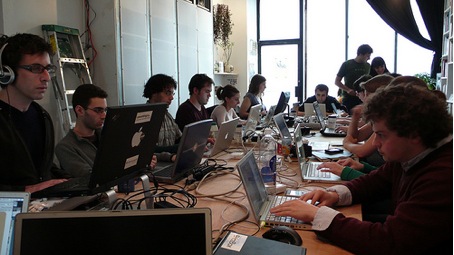
Abstract: More and more of the so-called knowledge workers from the creative class join so called CoWorking houses. CoWorking houses offer an easy, flexible and budget workspace (LAN and coffee flat rate included). They combine workspace (productive and functional) with a creativity hub (social, energetic, creative). By this, people from a broad spectrum of disciplines meet and can collaborate with each other. Many CoWorking houses explicitly promote great openness – people shall share knowledge and ideas. People, who in times of the “old” corporate offices probably would have never met can now come together and innovate.
Driver
Social
Especially freelancers try to escape social isolation in their homes or single offices and long for exchange with other peoples.
Technological
Modern IT provides the enabling technologies for the further flexibilisation (in time and location) of work.
Economic / Industrial
Work becomes more flexible. Value creation increasingly takes place in temporary projects, independently, at different locations, at different moments in time and without fixed salary positions, leading to an increasing number of freelancers professionals.
Political
Politicians facilitate the emergence of the creative class, as they hope to increase economic welfare
Obstacle
Political
“Old-fashioned” employment laws may hinder people from joining CoWorking Houses or inventing in this environment
Indication
Change in current innovation patterns
Mostly urban locations prefered by the creative class become increasingly important as innovation networking takes place there. Cities compete over the “innovation nomades” (or also creative project workers”) because companies see their presence as an important location advantace and base their headquarters accordingly.
Potential “innovation wild card”
Inventing does no longer take place in enterprises or laboratories
Source
Internet