Disruptive Innovation from India: The Tata Nano
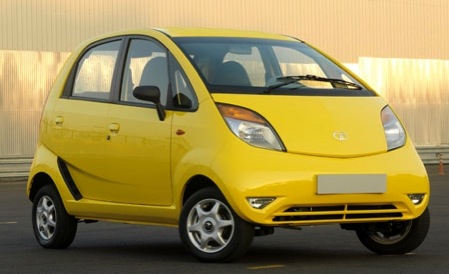
source: http://tatanano.inservices.tatamotors.com
Abstract: In January 2007 Tata Motors, India´s largest company in the automobile and commercial vehicle sector, launched a four-seater car with a purchasing price of around 1440 Euro. The Tata Nano is now the world’s cheapest car. Automotive suppliers are, amongst others, the German companies Bosch, Continental and BASF. In order to achieve this very low price, Tata Motors reduced the production costs by radically decreasing the car’s performance and focusing on a strictly low-cost-design. Since 90% of future growth in the car sector will take place in emerging and developing regions Tata is now in a “pole position” to conquer a major future growth market: low-price cars.
Driver
Social
As an India-based company, Tata has specific knowledge of local needs and the willingness to develop innovative and creative solutions, which fit the requirements of people with low income. Western companies so far have refused to develop a low-cost model even though they have the necessary abilities.
Technological
Tata´s Nano is composed out of several well-known technological solutions, such as the usage of plastic instead of metal, identical and modular components and is supplying a share of up to 40% of the car’s components via internet auctions. All together these factors could constitute a successful innovation strategy, which is worth to be imitated by more companies from other emerging countries.
Economic / Industrial
The main driver is considered to be the target group of the Tata Nano and it’s vast market potential. The target group is mainly composed of motorcyclists, moped riders and drivers of three-wheelers in India and other emerging countries with low spending power. Since the price of the Tata Nano is only two times higher than the price for a conventional Indian motorcycle, many people can now afford themselves a safe and comfort vehicle possessing four wheels.
Extremely low labour costs in India and the already mentioned cultural factors constitute favourable framework for international automobile corporations to outsource R & D tasks relating to low-price vehicles to departments located in India.
Indication
Change in current innovation patterns
Traditionally, disruptive technological innovations have been developed by international corporations with their origin in Western industrial nations. This Weak Signal is a prominent example for a possible change in this current innovation pattern, especially when it comes to innovations serving emerging markets and people at the bottom of the economic pyramid.
Potential “innovation wild card”
Corporation from emerging countries dominate the global market for innovations in one or more sectors. First they become successful in emerging and developing countries. In a second step they take over Western markets.
Sector specifics / cultural specifics
This Weak Signal is specific to Emerging Markets
Source
Internet
On the blog “Die Innovationsmaschine”,
URL: die-innovationsmaschine.de/
Magazine
Süddeutsche Zeitung, URL: www.sueddeutsche.de/wirtschaft/699/429452/text/