#3_NATCONSUMERS BRIEFING
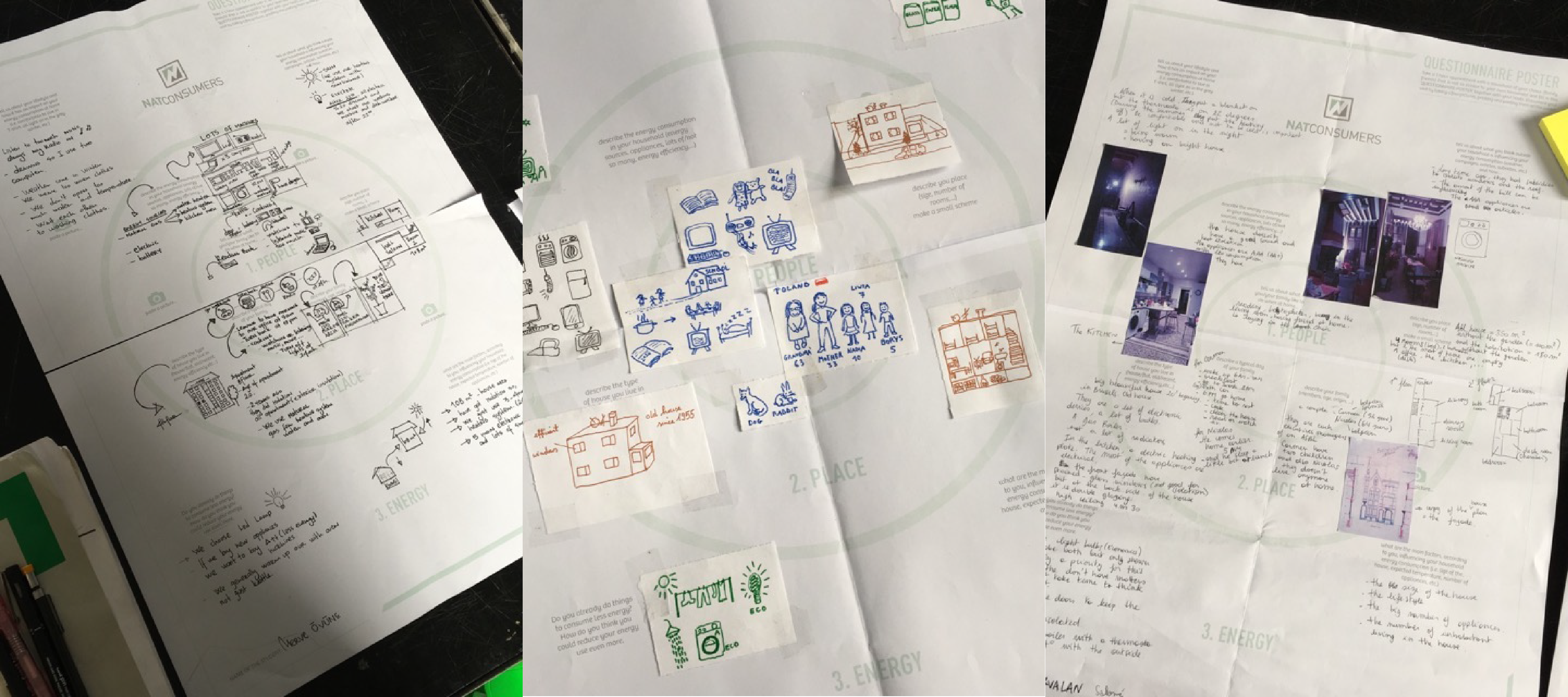
From the household investigation posters everybody made, the finding is that there are many factors influencing the energy consumption and family behaviours.
It was summarized in a simple scheme, showing us “actionnable” and “non-actionnable” facts by the users. For instance, the weather or buildings regulations aren’t actionnable in the context of the NATCONSUMERS project. It means that we can’t change it.
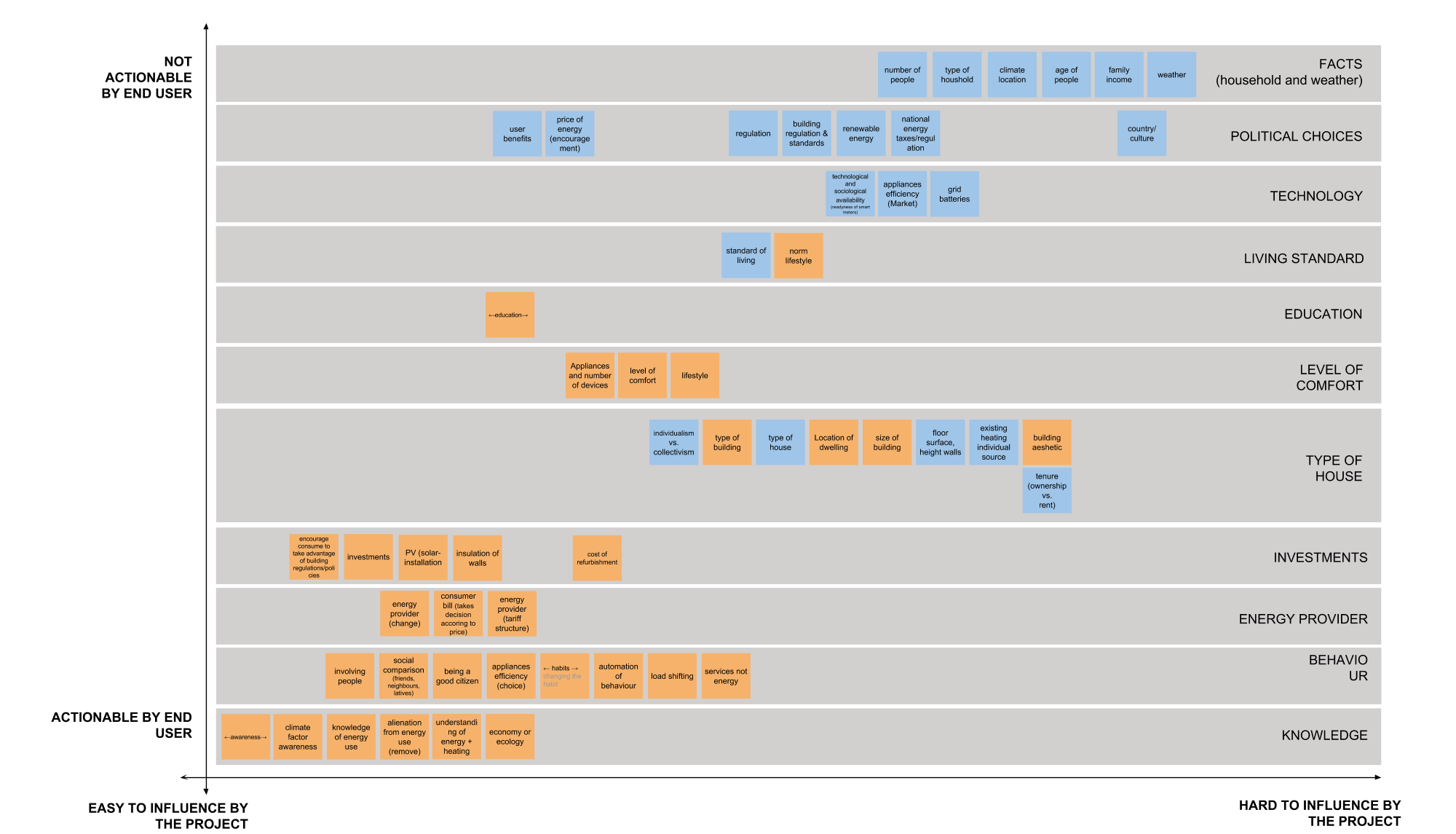
We focused then on actionnable factors within the NATCONSUMERS project. Different categories were listed. The knowledge on energy consumption for example, or the behaviors (habits, daily routines). The social comparison between peer was also particularly highlighted. We could change more our behaviour if we compare our energy consumption with our the consumption of our neighborhoods for example or households that are similar to ours. It introduces in our lifestyle a form of gentle competition.
The question of the NATCONSUMERS project is then how can we deliver a message and transform behaviors?
It deals with a question of right timing, with a balance in using the different senses (eyesight, hearing…).
Here the situated cognition (delivering the message in time and place when it is pertinent) comes out. The tone and the way we receive the information is very important. Is it a direct feedback (the message is delivered directly during the consumption.) or an indirect feedback?
The sender is a machine and sometimes it’s boring to have a monotonous tone telling us the same sentence. We get used to it. The machine could be “more intelligent” more “personified” and suddenly react to our voice.The way the message is delivered could be playful or ironic.
The discussion runs on what kind of instantiation the message should take? Starting from these different factors, we developed different storyboards where the feedback process could help us to change a behavior in a specific situation.
Roque-Nagumo Naomi